
My medication diary
When a child or teen starts ADHD medication, or has it reviewed, it can take a while to find the right medication and the right dose. This is a short daily check-in to notice how things are going, so there's something clear to share with whoever is prescribing.
Primary age
Print it and fill it in together at bedtime, with a parent or carer sitting beside them. Circling and faces, two or three minutes a night.
Download the diary (PDF)Age 11 and up
A quick check-in on their phone, in their own words. Saves on the phone only, and builds a week they can show the prescriber.
Open the teen check-inI'm a coach, not a clinician.
This diary is for noticing, not deciding. It isn't medical advice, and it doesn't replace your child's prescriber. Please don't change, skip or stop a dose because of what's in it. Talk to the prescriber first.
If you're worried about how your child is on their medication, contact the prescriber or your GP. If it's urgent, ring 111, or 999 in an emergency.
How to use it
- Two or three minutes at bedtime. Your child holds the pen. Sit beside them, read the questions out if that helps, and let the answers be theirs.
- There are no right answers. "Not great" days are useful to know about, not a sign that anything has gone wrong.
- Add your own notes. You'll notice things they don't, such as what time the medication was taken and how the evening went.
- Fill in the weekly summary together. Then take the diary to every prescriber appointment. Patterns across a week say more than any single day.
What's inside
The printable primary-age diary, designed for A4 and quick enough to keep going with.
A page for parents and carers
What the diary is for, how to use it, and what to do on days the medication isn't taken.
Seven daily pages
Mostly circling: how they felt, concentration, eating, sleep, how their body felt and how they were after school, plus one thing that went well.
"Did I feel like me today?"
Some children say they don't feel quite like themselves on medication. A child who is calm and quiet can look as if they're doing well, so this question gets extra space.
A weekly summary
The week at a glance, including which days the medication was taken, with space for what you'd like to ask the prescriber.
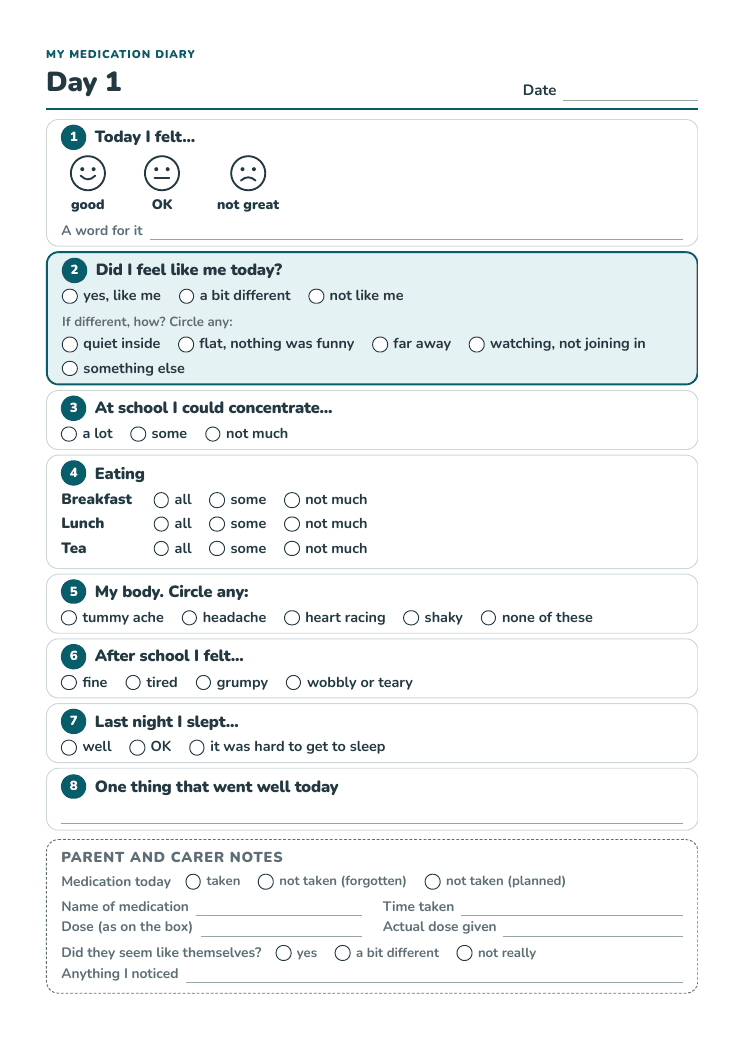
One of the seven daily pages
On days the medication isn't taken
Some days it will be forgotten, or the prescriber will have planned a break. Fill the diary in as usual and tick “not taken” at the bottom of the page. Seeing those days next to the others can help the prescriber. Please don't leave a dose out on purpose to compare. Talk to the prescriber first.
You're welcome to share the diary with other families and with professionals, as it is, with my name and website on it. I'd love to hear how it goes.
Want to understand more about the wider picture? The “Might my child have ADHD?” guide is a good place to start.
Finding this stage a lot?
Book a free 30-minute consultation - a calm, no-pressure chat about what's happening at home, what you're finding hardest, and how I can help.
Book a free consultationAbby Parkes ADHD Coaching & Support · adhdcoachingandsupport.co.uk